Antibiotics are essential for treating bacterial infections in livestock. However, their unnecessary or inappropriate use can contribute to antimicrobial resistance, affecting both animal and human health. At the same time, the improper disposal of veterinary medicine bottles, plastic containers, and other veterinary waste in grazing lands and water sources poses environmental risks that require greater attention.
Pastoral communities possess valuable traditional knowledge of livestock healthcare, herbal veterinary practices, and the ecological management of grazing landscapes. This campaign seeks to recognise and document this knowledge while encouraging responsible veterinary care and the appropriate use of essential medicines. Chemical-free pastoralism does not mean rejecting necessary veterinary treatment; it means reducing unnecessary chemical use and promoting responsible, ecologically sensitive livestock management.
A Key Policy Objective: Government Guidelines for Veterinary Waste Management
An important objective of this campaign is to advocate for dedicated government guidelines for the collection, segregation, and safe disposal of veterinary medicine waste generated in pastoral grazing landscapes.
Unlike conventional livestock farms, pastoral livestock systems often operate across extensive grazing lands, village commons, forests, and seasonal migration routes. Veterinary medicines are used in these landscapes, but accessible systems for collecting and safely disposing of empty medicine bottles, plastic packaging, expired medicines, and other veterinary waste may be lacking.
Discarding such waste in grazing areas and near water sources can create risks for livestock, wildlife, ecosystems, and communities. We therefore believe that a specific, practical government framework is needed to address the particular circumstances of pastoral livestock systems.
Through this campaign, TFPPS seeks to encourage dialogue among pastoral communities, veterinary professionals, researchers, environmental organisations, and government authorities towards developing guidelines that could include:
- Community-level collection and segregation systems for veterinary medicine waste.
- Designated collection points accessible to pastoralists along grazing routes and in livestock-rearing areas.
- Safe handling, transportation, and disposal through appropriate authorised waste-management systems.
- Awareness programmes on responsible medicine use and the environmental risks associated with improper waste disposal.
- Documentation of traditional herbal veterinary knowledge and promotion of appropriate, evidence-informed livestock healthcare.
These proposed measures aim to bridge the gap between veterinary healthcare and environmental protection in pastoral landscapes.
Campaign Activities and Participation
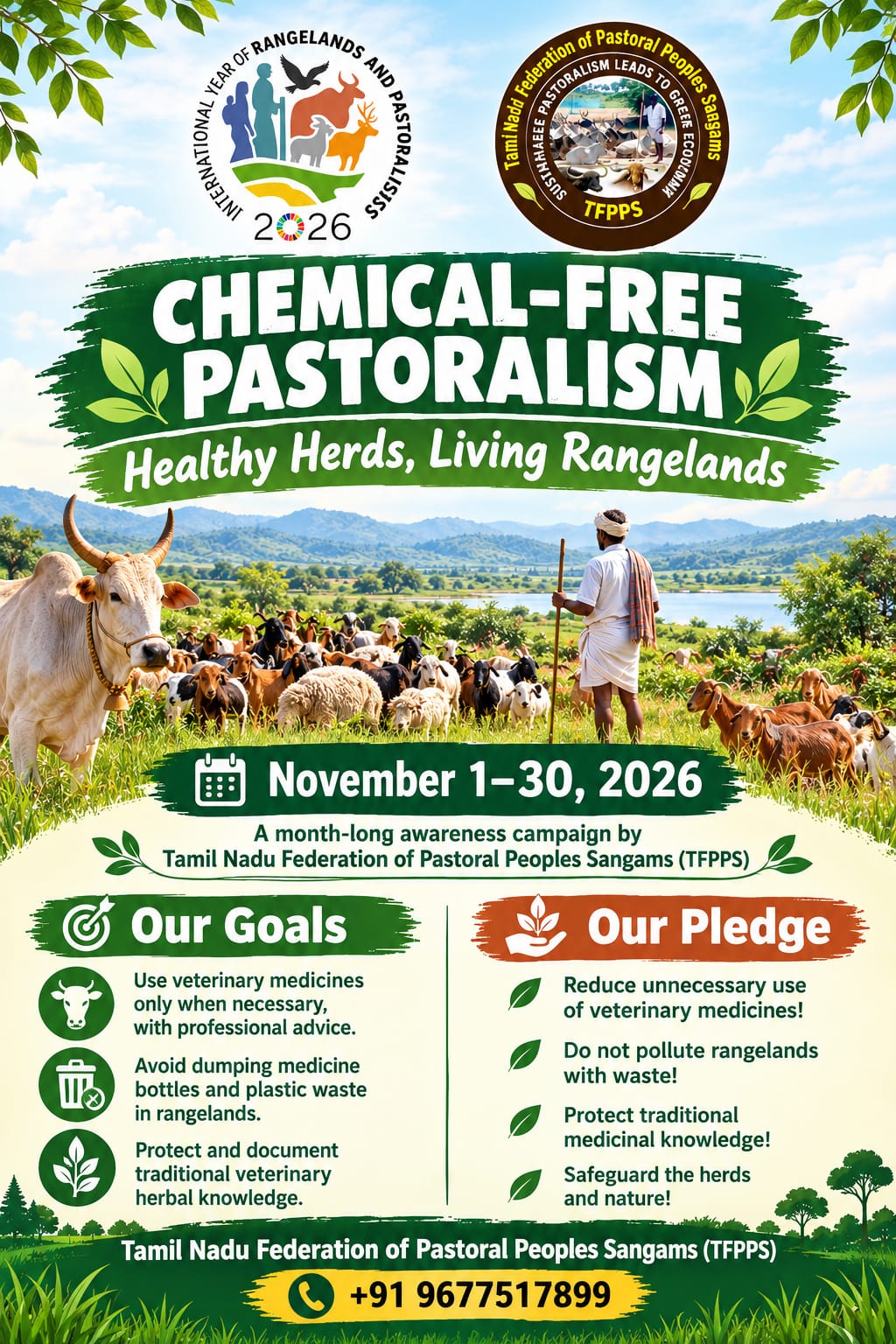
From 1–30 November 2026, TFPPS invites pastoral communities, veterinarians, researchers, students, environmental activists, civil society organisations, and community-based organisations across Tamil Nadu to participate in awareness activities, knowledge-sharing initiatives, documentation of traditional practices, and advocacy for improved veterinary waste management.
The campaign will promote collaboration between traditional pastoral knowledge and responsible veterinary practices, while highlighting the importance of healthy livestock, living rangelands, and sustainable pastoral livelihoods.
We believe this initiative contributes to the broader objectives of the International Year of Rangelands and Pastoralists (IYRP) 2026 by highlighting the relationship between pastoral knowledge, animal health, environmental sustainability, and the protection of rangeland ecosystems.